8th Century (Reconstructed multiple times)
3,583 meters
Ancient Himalayan Temple Architecture
Garhwal
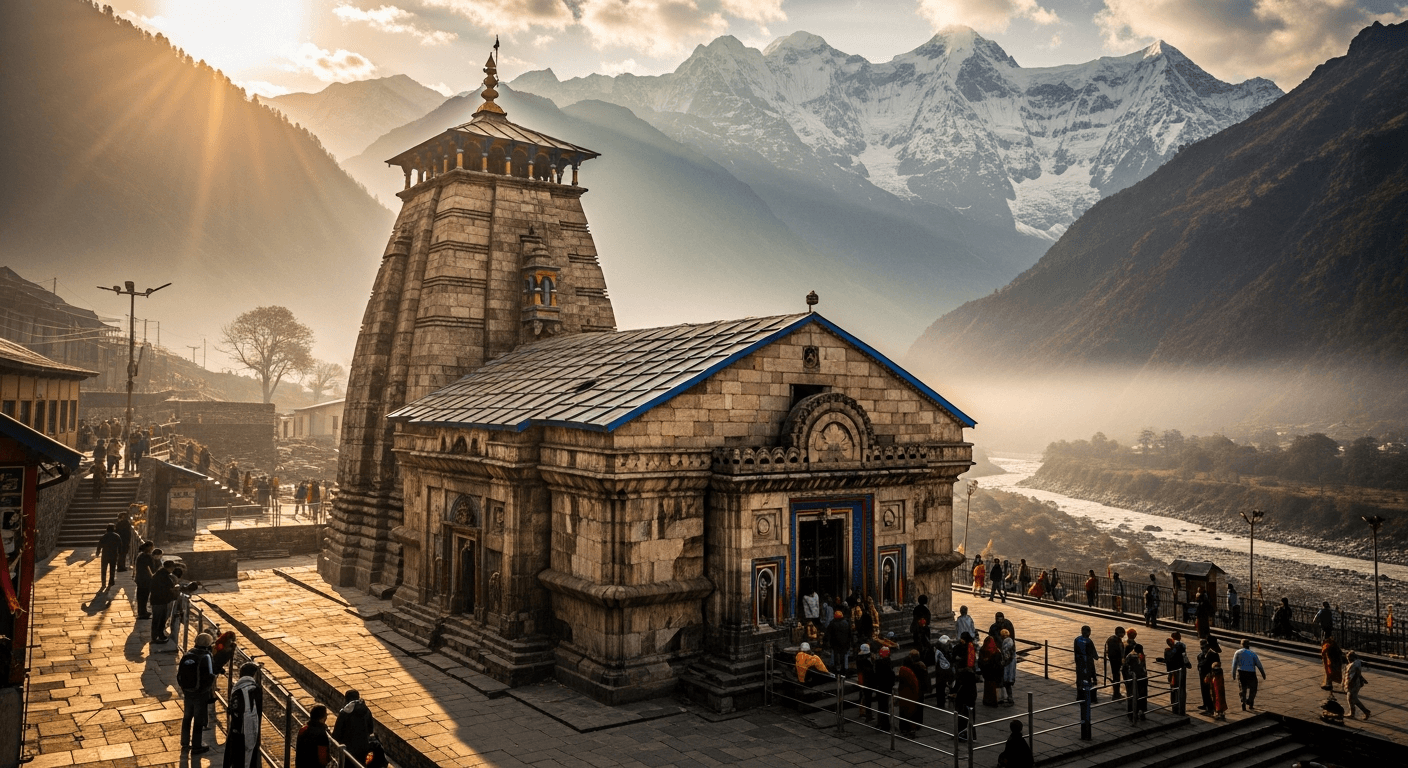
As dawn breaks over the Himalayas, the first rays of sunlight illuminate Kedarnath Temple, casting long shadows of ancient stone walls. Centuries ago, pilgrims would make this arduous journey to seek Lord Shiva's blessings, and today, thousands still climb these sacred paths. Each step echoes with the footsteps of millions throughout history, and the temple stands as an eternal witness to faith that transcends time. The freezing waters of Mandakini River flow nearby, believed to cleanse the soul of all impurities, making Kedarnath not just a temple, but a sanctuary where earth meets heaven.
Kedarnath Temple stands as a testament to ancient Hindu architectural prowess and spiritual devotion. Nestled in the heart of the Himalayas, this sacred shrine has witnessed centuries of devotion from pilgrims seeking the blessings of Lord Shiva. The temple's pyramid-shaped structure rises majestically against the snow-capped Kedarnath peak, creating a breathtaking silhouette that speaks of timeless spirituality.
According to legend, this temple was discovered by Adi Shankaracharya in the 8th century, though the temple you see today has been rebuilt multiple times following devastating earthquakes and natural calamities. The 2013 flash floods tested its resilience, yet its ancient stone foundation survived, symbolizing the indomitable spirit of the Himalayan land.
Ancient Himalayan Stone Construction with Pyramid-shaped roof
Local river stones with intricate carvings and ancient mortarless joints
8th Century onwards, with continuous restoration
Narrow stone passageways symbolizing the spiritual journey
Ancient stone carvings depicting Shiva and celestial beings
Underground water channels using ancient hydraulic systems
Walls constructed without mortar - a marvel of ancient engineering
Home to one of the twelve Jyotirlingas (manifestations of Lord Shiva), representing cosmic energy. Pilgrims believe that worshipping at Kedarnath absolves one of all karmic debts. The temple represents the divine mountain sanctuary where Lord Shiva is said to have revealed the secrets of spiritual transformation.
June to September
Gaurikund to Kedarnath (16 km trek, 4-6 hours)