8th Century
3,300 meters
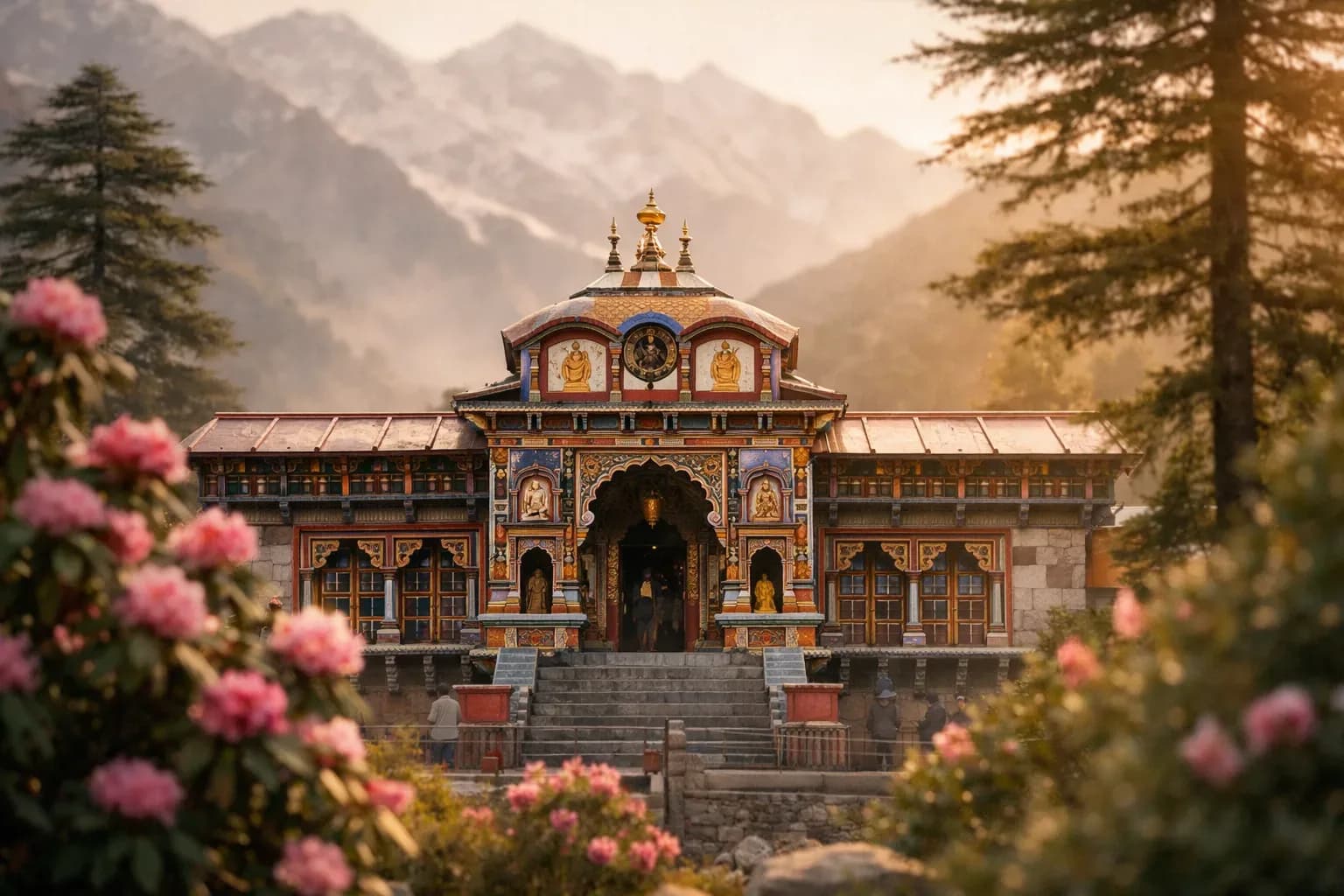
Ancient Hindu Temple with Gopuram
Garhwal
In the ethereal Valley of Gods, where clouds caress mountain peaks and the Alaknanda River sings ancient hymns, stands Badrinath Temple. Pilgrims arrive with hearts full of devotion, seeking the blessings of Lord Narayan. The natural hot springs near the temple are believed to possess healing powers, and thousands have experienced spiritual transformation in their waters. As sunset paints the peaks in golden hues, the temple's brass spire glimmers like a beacon of hope, reminding all who see it that the divine is not distant but intimately present in the Himalayan wilderness.
Badrinath Temple, standing majestically in the Valley of Gods, is one of the most sacred shrines in Hindu pilgrimage circuits. Dedicated to Lord Vishnu in his Narayan form, this temple represents the cosmic energy of protection and sustenance. The temple's distinctive architectural style, featuring intricate wood carvings and stone work, reflects the synthesis of Himalayan culture and Vedic traditions.
According to mythology, this temple marks the spot where Lord Vishnu meditated in the form of Badrinarayan. The temple was restored by Adi Shankaracharya in the 8th century, though the current structure reflects continuous renovations. The temple has survived centuries of harsh Himalayan winters and natural calamities, standing as a symbol of eternal spiritual presence.
Ancient Hindu Gopuram style with pagoda roof, intricate wood and stone carving
Local stone with ornately carved wooden details, brass-plated spire
8th Century with continuous preservation and restoration
Ornate wooden pillars with religious carvings
Central sanctum with brass idol of Lord Narayan
Stone walls carved with religious iconography
Natural hot springs integrated into temple complex (Tapt Kund)
Badrinath is believed to be the cosmic gateway to spiritual salvation. Visiting the four cardinal Dhams (Badrinath, Dwarka, Rameswaram, Kedarnath) is considered the ultimate pilgrimage goal in Hindu tradition. The temple represents the protective and nurturing form of Lord Vishnu.
May to October